
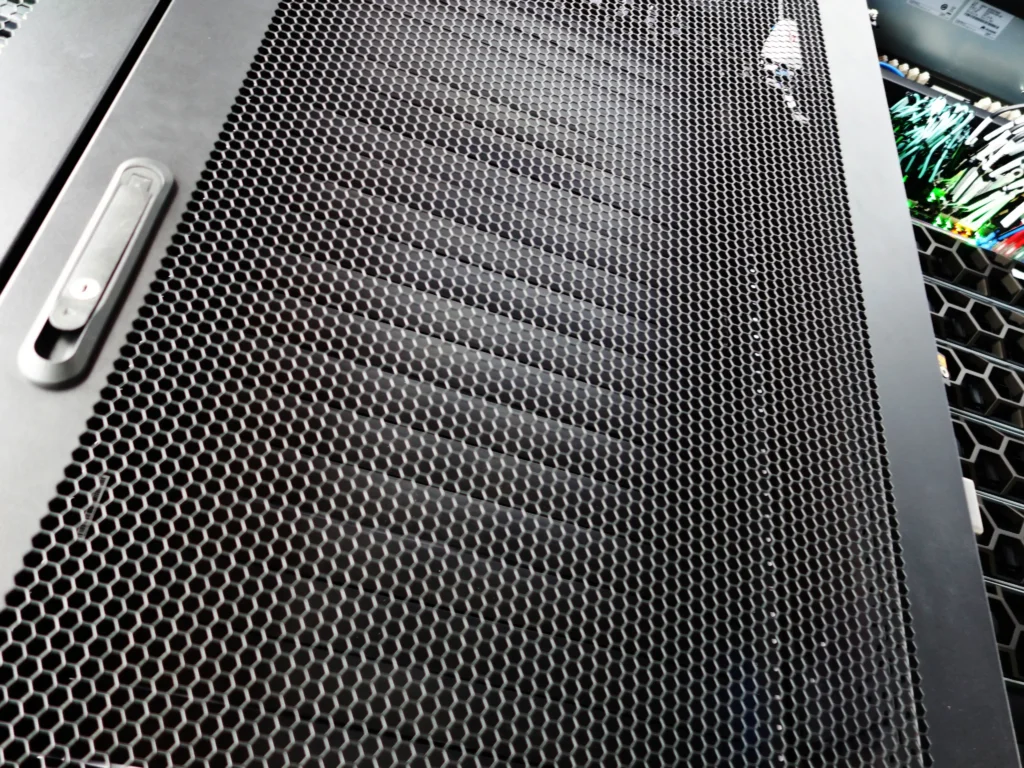
Data center infrastructure must support years of continuous operation, making material selection an important part of the design and fabrication process. The metals used for equipment racks, cable trays, structural supports, and cooling assemblies can affect durability, maintenance requirements, and long-term costs.
Carbon steel, stainless steel, and aluminum are common choices for fabricated metal components. Each offers different advantages depending on the operating environment, structural requirements, corrosion exposure, and project budget.
Understanding these differences can help facility planners, engineers, and manufacturers make informed decisions about data center material selection.
The Case for Carbon Steel
Durability and Strength
Carbon steel is widely used in structural fabrication because of its strength, stiffness, and cost efficiency. These properties make it a practical option for equipment racks, support frames, and other components designed to carry significant loads.
For load-bearing applications, the material’s grade, thickness, geometry, and connection design all influence the finished component’s performance.
Thermal Properties
Carbon steel generally conducts heat more readily than common austenitic stainless steels, although its thermal conductivity is considerably lower than aluminum’s.
This property can be relevant in components where conductive heat transfer is part of the design. However, the thermal performance of an assembly depends on more than the material alone, including its geometry and operating conditions.
Cost Efficiency
Cost is often a major factor in material selection, particularly for large fabrication projects.
Carbon steel generally has a lower initial material cost than common stainless steel grades, making it an attractive option when additional corrosion resistance is not a primary requirement.
Its widespread use in cutting, forming, and welding also makes it practical for a range of custom fabricated components.
However, final costs depend on material specifications, component complexity, production volume, and finishing requirements.
The Corrosion Challenge
Carbon steel’s main limitation is its susceptibility to rust when exposed to moisture and oxygen.
In climate-controlled indoor environments, this risk can often be managed with protective finishes such as paint, powder coating, or zinc-based coatings.
Components installed outdoors, near coastal environments, or in areas prone to condensation may require additional corrosion protection.
The appropriate finish should reflect the component’s actual exposure conditions and expected maintenance requirements.
When Stainless Steel Becomes Essential
Superior Corrosion Resistance
Stainless steel offers greater corrosion resistance than uncoated carbon steel, making it useful for components exposed to moisture or potentially corrosive conditions.
Its chromium content allows a protective passive oxide layer to form on the surface, helping protect the underlying metal from corrosion.
Unlike carbon steel, stainless steel generally does not depend on paint or powder coating for its basic corrosion resistance.
However, stainless steel is not completely immune to corrosion. Its performance depends on the grade, surface condition, and operating environment.
High-Humidity Data Centers
For components exposed to persistent moisture, condensation, or corrosive contaminants, stainless steel may offer advantages over uncoated carbon steel.
Two commonly used stainless steel grades are 304 and 316.
304 stainless steel provides good corrosion resistance for many general applications.
316 stainless steel contains molybdenum, which improves resistance to certain types of localized corrosion, particularly in chloride-containing environments.
This difference can matter for equipment exposed to coastal conditions or salt deposits.
However, a data center located in a humid region does not necessarily require stainless steel throughout the facility. Indoor environmental controls and the conditions surrounding each component should guide material selection.
Durability and Maintenance
One advantage of stainless steel is that it generally does not require a protective coating to maintain its basic corrosion resistance.
This can reduce coating-related maintenance, particularly for components that are difficult to access after installation.
However, stainless steel may still require periodic cleaning and inspection depending on its exposure to moisture, contaminants, and other environmental conditions.
For infrastructure expected to remain in service for many years, these maintenance considerations can influence the overall cost of ownership.
Thermal Properties
Common austenitic stainless steels, including grades 304 and 316, have lower thermal conductivity than carbon steel and aluminum.
This can be relevant in applications where limiting conductive heat transfer is desirable.
As with other materials, the thermal performance of a finished component depends on its overall design and operating conditions.
Cost Premium
Stainless steel typically has a higher initial material cost than carbon steel.
For larger fabrication projects, this difference can be significant. However, when corrosion resistance and maintenance requirements are important, stainless steel may offer advantages that justify its additional cost.
The decision should consider initial fabrication expenses alongside potential maintenance and replacement requirements over the component’s expected service life.
Aluminum’s Role in Data Center Fabrication
Lightweight Advantage
Aluminum has approximately one-third the density of steel, making it useful for applications where reducing component weight is important.
Cable trays, equipment covers, and certain enclosure panels may benefit from aluminum’s lower weight, particularly when ease of handling and installation are priorities.
However, weight savings should always be evaluated alongside the component’s structural requirements.
Thermal Conductivity
Aluminum generally has much higher thermal conductivity than carbon steel or common stainless steel grades.
This makes it worth considering for components specifically designed to transfer or distribute heat.
For applications involving thermal management, aluminum’s conductivity can be an advantage. However, using aluminum does not automatically improve cooling efficiency.
Actual performance depends on the complete assembly, including airflow, component geometry, contact surfaces, and operating conditions.
Corrosion Resistance
Aluminum naturally develops a protective oxide layer that helps resist corrosion in many environments.
Unlike carbon steel, it does not develop iron rust, although it can still experience other forms of corrosion.
Exposure to chlorides, aggressive chemicals, or contact with dissimilar metals can create additional concerns.
Appropriate material selection, protective treatments, and connection design can help manage these risks.
Structural Limitations
Aluminum generally has a lower elastic modulus than steel, meaning a component of the same geometry may deflect more under a comparable load.
For certain structural applications, designers may need to increase material thickness, modify the component’s shape, or add reinforcement to achieve the required stiffness.
These changes can affect both weight and manufacturing costs.
Aluminum can still be used in structural applications when properly engineered, but it is also useful for weight-sensitive panels, covers, and other fabricated components.
Cost Considerations
Aluminum costs vary depending on alloy, product form, and market conditions.
Although its lower weight may offer handling and installation advantages, fabrication requirements can influence the overall project cost.
Aluminum also behaves differently from steel during forming and welding, which can affect tooling, processing, and joining requirements.
The total cost should therefore account for both the raw material and the manufacturing processes involved.
Climate-Based Material Selection Guide
The operating environment plays an important role in choosing materials for data center infrastructure.
Rather than selecting a material based only on the facility’s geographic location, consider the actual conditions each component will experience.
Controlled Indoor Environments
Potential material option: Carbon steel with an appropriate protective coating.
For components installed in dry, climate-controlled environments, carbon steel may provide a practical balance of strength, durability, and cost.
Potential applications include equipment supports, structural frames, and interior-mounted components.
Protective coatings should be inspected and maintained according to the application.
High-Humidity Regions
Potential material option: Stainless steel for components exposed to sustained moisture or condensation.
Stainless steel may reduce the need for coating-related maintenance in these conditions.
However, high outdoor humidity does not necessarily mean every indoor component requires stainless steel. The facility’s environmental controls and the component’s actual exposure are important considerations.
Coastal or Salt-Air Environments
Potential material option: 316 stainless steel or another appropriately protected material.
Chloride exposure can increase the risk of localized corrosion.
316 stainless steel offers improved resistance to certain chloride-related corrosion mechanisms compared with 304.
Depending on the application, suitably protected carbon steel or selected aluminum alloys may also be appropriate.
The final choice should reflect the actual exposure conditions and design requirements.
Variable Climates with Poor Environmental Control
Potential material options: Stainless steel or appropriately protected carbon steel.
Where components experience changing humidity, temperature fluctuations, or occasional condensation, corrosion protection becomes particularly important.
Material selection should consider the severity and frequency of exposure rather than relying on climate classifications alone.
Heat-Intensive Applications
Potential material option: Aluminum where conductive heat transfer is an important design requirement.
Aluminum’s higher thermal conductivity can be useful for certain thermal-management components.
For load-bearing assemblies, steel may offer mechanical advantages. Stainless steel may also be appropriate where corrosion resistance is a significant concern.
The final selection should account for both thermal and structural requirements.
Cost-Sensitive Projects
Potential material option: Carbon steel with a suitable protective finish.
Carbon steel can be a cost-effective choice when its mechanical properties meet the component’s design requirements.
However, coating costs, maintenance needs, and environmental exposure should be considered alongside the initial material price.
Hybrid Material Approaches
Different components within the same data center may have different material requirements.
Using more than one metal in an assembly can help balance cost, strength, corrosion resistance, and weight.
Depending on the design, potential combinations include:
Carbon Steel Structure + Stainless Steel Exteriors
Carbon steel may be used for structural frames, while stainless steel is selected for exposed components where additional corrosion resistance is beneficial.
Steel Load-Bearing Components + Aluminum Panels
Steel can provide structural support, while aluminum is used for covers or panels where reducing weight improves handling or installation.
Stainless Steel Cable Management + Carbon Steel Racks
Stainless steel may be considered for cable-management components exposed to moisture, while properly protected carbon steel is used for equipment racks in controlled environments.
These are possible design approaches rather than universal material specifications.
When combining different metals, engineers must also consider material compatibility, connection methods, and the risk of galvanic corrosion, particularly when moisture is present.
Coating and Surface Treatments
Protective finishes can improve corrosion resistance and help fabricated components meet specific environmental requirements.
The appropriate treatment depends on the base material, exposure conditions, and intended application.
Powder Coating
Powder coating provides a protective and decorative finish for many fabricated steel components.
Its effectiveness depends on surface preparation, coating specifications, application quality, and environmental exposure.
Galvanized Finish
Galvanizing applies a protective zinc coating to steel.
Hot-dip galvanizing can provide long-term corrosion protection, although its service life varies depending on coating thickness and environmental conditions.
Passivation (Stainless Steel)
Passivation is a chemical treatment used to remove certain surface contaminants, particularly free iron, from stainless steel.
Proper treatment can help restore or maintain the material’s natural corrosion resistance.
Anodizing (Aluminum)
Anodizing creates a controlled oxide layer on aluminum surfaces.
This treatment can improve corrosion and wear resistance, depending on the alloy, treatment specifications, and operating environment.
Making the Selection: Key Questions
Before choosing materials for a data center fabrication project, consider the following questions:
- What is the operating environment? Will the component be installed in a controlled indoor area or exposed to moisture, temperature changes, or corrosive contaminants?
- What is the expected service life? How long must the component remain in use, and what maintenance may be required?
- What is the component’s role? Does it need to support loads, protect equipment, reduce weight, or serve a thermal function?
- What maintenance resources are available? Can protective coatings be inspected and maintained, or would a more corrosion-resistant material be preferable?
- What are the thermal requirements? Is heat transfer an important part of the component’s function?
- What is the total project budget? Consider material, fabrication, finishing, installation, and maintenance costs.
- Are appearance and finishing important? Will the component need to meet specific surface-finish or aesthetic requirements?
Answering these questions can help narrow down suitable materials before finalizing the component design.
Working With Your Fabrication Partner
Material selection should involve collaboration between facility planners, engineers, and fabrication partners who understand the project’s design and manufacturing requirements.
Factors such as material grade, thickness, cutting, forming, welding, and finishing can all influence how a component is manufactured.
At The Bionic Welder, our services include laser cutting, CNC brake forming, and robotic and manual welding. We work with steel, stainless steel, and aluminum and provide powder coating support as part of our fabrication services.
Whether your project requires structural steel components, corrosion-resistant stainless steel parts, or lightweight aluminum assemblies, our team can discuss your drawings and fabrication requirements.
Planning a data center infrastructure project? Contact The Bionic Welder to discuss your metal fabrication needs.